
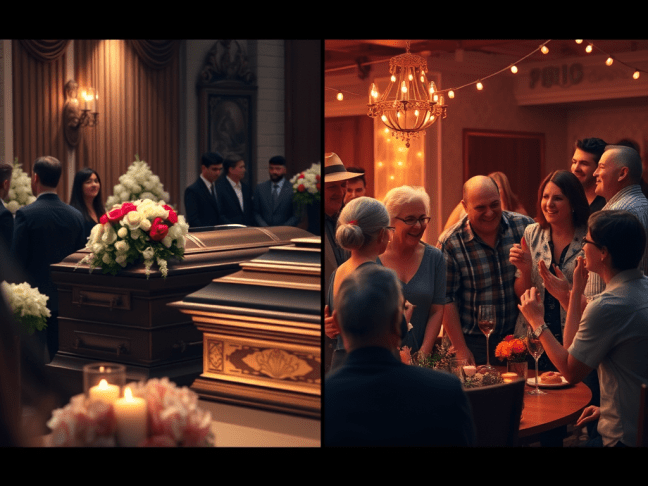
While this popular saying is a simplification, it gets to the heart of the key differences between a funeral and a memorial service. In our modern world, the lines between these ceremonies are often blurred, but understanding their traditional distinctions can help you and your family plan a service that truly honors your loved one’s life and helps you begin the grieving process.
The Funeral: A Solemn Farewell
A traditional funeral is a ceremony where the body of the deceased is present, usually in a casket. The primary purpose of a funeral is to acknowledge the reality of death and to provide a formal, often religious, setting for people to say their final goodbyes.
Key characteristics of a funeral:
- The body is present: This is the most significant difference. A funeral is a final tribute to the physical presence of the person.
- Timing is immediate: Funerals are typically held within a few days of death, as they must take place before burial or cremation.
- Formal and traditional: Funerals often follow established religious or cultural rituals. They may include a formal visitation or wake, a religious service, and a graveside committal ceremony.
- Somber tone: The mood is generally solemn, focusing on grief and loss. Mourners typically wear dark or formal attire.
- Location: Funerals are most often held in a funeral home or a place of worship.
The Memorial Service: A Celebration of a Life
A memorial service, by contrast, is a gathering where the body of the deceased is not present. While an urn with cremated remains may be on display, the focus is on celebrating the person’s life rather than the final disposition of their body.
Key characteristics of a memorial service:
- The body is not present: This offers great flexibility in terms of timing and location. The service can be held weeks or even months after the passing.
- Flexible timing: The delay allows friends and family, especially those traveling from a distance, ample time to make arrangements and attend. It also gives the family more time to plan a meaningful event.
- Personal and personalized: Memorial services are often less formal and more reflective of the deceased’s personality. They can be held at any location that was significant to them, from a park to a favorite restaurant or even a home.
- Celebratory tone: The mood of a memorial service is often more uplifting. Stories, laughter, and fond memories are encouraged, with the focus on the life lived, not the death.
- Customizable: You can tailor every aspect of a memorial service, from the music and dress code to the food and activities. Guests may be asked to wear a favorite color or to share a personal anecdote.
Which One Is Right for You?
The choice between a funeral and a memorial service is a personal one, and you don’t have to choose just one. Many families opt for a private, immediate burial or cremation followed by a public memorial service at a later date. This allows for both a traditional, intimate goodbye for the closest family and a larger, more celebratory gathering for the wider community.
Ultimately, both types of services serve a crucial purpose: to provide a space for grieving, to honor a loved one, and to bring people together to offer comfort and support. The “right” choice is the one that best reflects the wishes of the person who has passed away and provides a path to healing for those who are left behind.
 Celebrate & Remember Funeral Pastor