
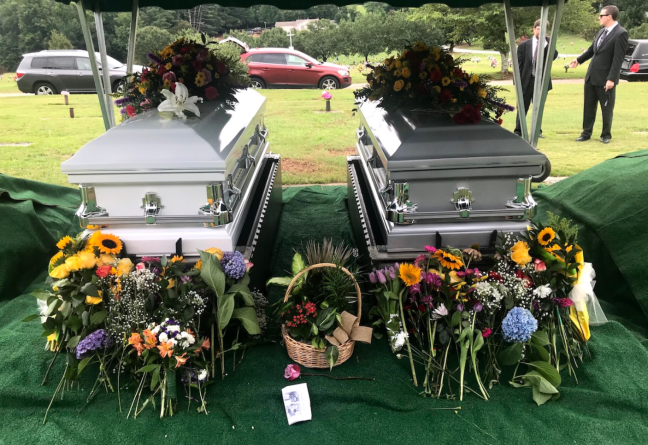
When two people who were deeply connected pass away at or near the same time, a single, joint funeral service can be a powerful and practical way to honor their lives. This type of service, often called a “double funeral,” “joint funeral,” or “dual funeral,” is a unique and challenging undertaking. While it offers a way for shared friends and family to mourn and remember together, it also requires careful consideration and planning to ensure both individuals are equally and respectfully honored.
Here is a guide to help you navigate the process of planning a funeral for more than one person.
Is a Double Funeral the Right Choice?
A double funeral is most appropriate when the deceased shared a profound, intertwined relationship, such as:
- Spouses or life partners: The most common scenario, a joint service for a couple who lived and often died together, is a beautiful symbol of their lifelong bond.
- Siblings: A double service can honor the unique and unbreakable connection between brothers or sisters.
- Parents and children: This is often the case in tragic accidents where a parent and child pass away together.
The decision to have a joint service should be made after careful consideration of the wishes of the deceased and the needs of all surviving family members.
Instructions and Key Considerations
While the general steps for planning a funeral remain the same—contacting a funeral home, choosing a type of service, and making arrangements for burial or cremation—a double funeral requires special attention to a few key areas.
- Logistics and Venue Space:
- Anticipate a larger crowd: A double funeral will likely draw more attendees than a single service. Ensure the funeral home, place of worship, or other venue has enough seating and space to comfortably accommodate a larger number of people.
- Hearse and caskets: Depending on the type of service, you will need to coordinate with the funeral home for two caskets and potentially a double hearse or two separate hearses.
- Consider a longer service: To allow time for multiple eulogies and tributes, the service may need to be longer than a standard funeral. Inform the funeral home and any clergy members of this need so they can plan accordingly.
- Honoring Both Lives Equally:
- Eulogies and tributes: This is perhaps the most crucial part of a joint service. Ensure that both individuals are the subject of separate eulogies or that a single eulogy is carefully structured to give equal time and attention to each person’s life, accomplishments, and personality.
- Visual displays: If you are using a slideshow of photos or a video tribute, make sure both people are well-represented. Avoid creating a tribute that focuses heavily on one person over the other.
- Personalization: Find ways to incorporate the unique interests, hobbies, and favorite music of each person. The service can be structured to have a “section” for each individual, with readings or songs that were meaningful to them.
- Blending Traditions and Customs:
- Respectful integration: If the two individuals came from different religious or cultural backgrounds, you must be intentional about how you merge their traditions. This might mean having two different clergy members participate or incorporating elements from both faiths.
- Open communication: Different families may have varying preferences for the service’s tone and content. Open and respectful communication between all family members is essential to ensure that the service honors everyone’s wishes.
- Practical and Financial Matters:
- Billing and costs: While a double funeral may save on some costs, such as the use of the space, funeral homes often bill for each person’s services separately due to logistical and insurance reasons.
- Cremation or burial: Consider the final disposition for both individuals. Some families opt for a double-depth burial plot or a shared cremation niche, which can be both a meaningful and a cost-effective option.
A joint funeral service, while emotionally and logistically challenging, can be a profoundly moving experience. It provides a unique opportunity to celebrate two interconnected lives and allows friends and family to grieve and find solace together in a shared moment of remembrance.
 Celebrate & Remember Funeral Pastor